

How to Reduce Noise with Perforated Metal Panels in Commercial Spaces
Posted by A1 Metal Mesh on 24th Feb 2026
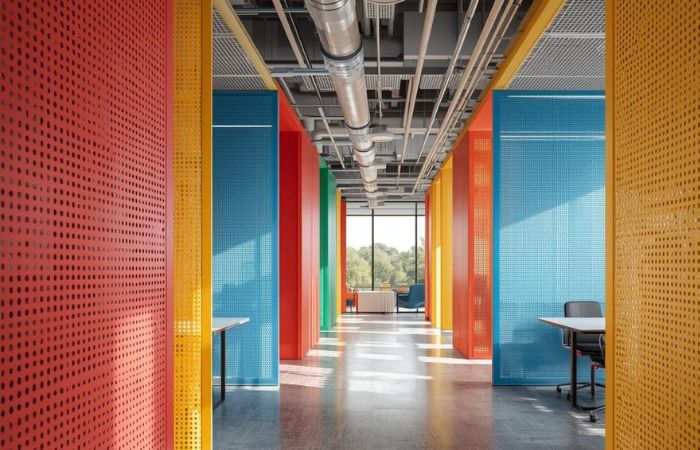
Noise is one of the most overlooked challenges in Australian commercial design. Open-plan offices, hospitality venues, education facilities and transport hubs often prioritise aesthetics and functionality, yet poor acoustics can undermine both. Hard surfaces such as glass, concrete and plasterboard reflect sound waves, increasing reverberation and creating echo. The result is distraction, reduced speech clarity and lower overall comfort.
Perforated metal panels offer a durable and architecturally refined way to manage noise. When properly specified, they combine acoustic performance with long-term resilience, making them ideal for demanding commercial environments. This guide explains how perforated metal panels reduce noise, where they work best, and how to specify them for effective acoustic control.
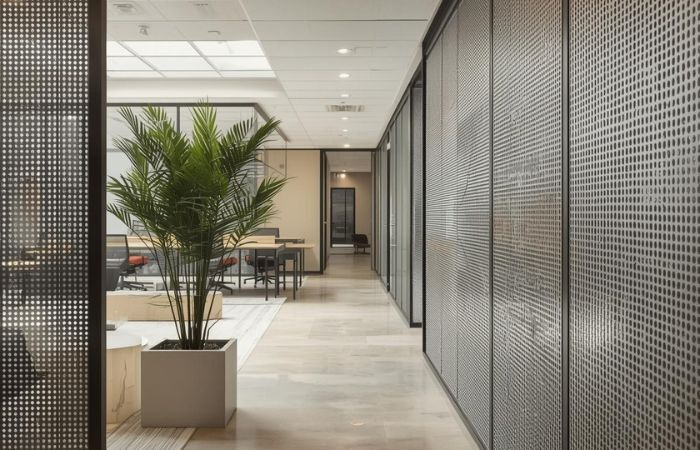
Why Acoustic Control Matters in Commercial Buildings
In commercial spaces, sound quality directly affects how people work, learn and interact. Excessive reverberation can make conversations difficult, increase fatigue and reduce productivity. In hospitality settings, it can discourage customers from staying longer. In educational facilities, it impacts comprehension and engagement.
According to the Australian Bureau of Statistics, around 46 per cent of employed Australians work primarily in professional and office-based roles. That represents millions of people spending extended periods in environments where acoustic comfort influences daily performance. Improving reverberation control is therefore not simply an aesthetic choice. It is a practical investment in wellbeing and operational efficiency.
Acoustic performance is also tied to compliance requirements under the National Construction Code and relevant Australian Standards, particularly in education and healthcare projects.
How Perforated Metal Panels Reduce Noise
Sound Absorption Through Perforations
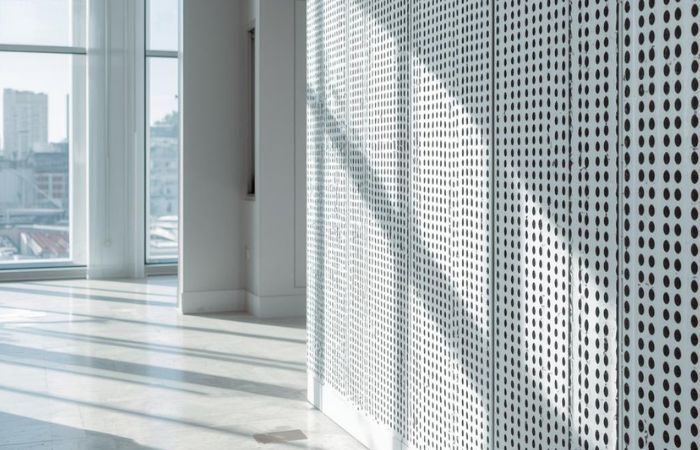
Solid metal reflects sound. However, perforated metal panels function differently. The small, evenly distributed holes allow sound waves to pass through the panel surface and into a layer of acoustic insulation behind it. This backing material, often mineral wool or acoustic fabric, absorbs sound energy and reduces reflection.
The process converts sound energy into a small amount of heat through friction within the fibrous insulation. As reflected sound decreases, overall reverberation time is reduced, and speech intelligibility improves.
Controlling Reverberation Time
Reverberation time refers to how long sound persists in a room after the source stops. In large or hard-surfaced spaces, reverberation time can be excessive, leading to echo and muddiness.
Perforated metal ceiling panels and wall systems absorb mid and high frequency sounds that are most common in human speech. By reducing reflected sound energy, they help achieve balanced acoustic conditions suitable for:
- Open-plan offices
- Boardrooms and meeting rooms
- Retail stores
- Restaurants and cafes
- Airports and transport terminals
Integrating with Building Services
One of the advantages of perforated metal is its compatibility with building services. Ceiling systems can integrate lighting, HVAC and fire sprinklers without compromising airflow. This makes perforated panels particularly suitable for commercial fitouts that require both acoustic performance and service accessibility.
Types of Perforated Metal Acoustic Applications
Acoustic Ceiling Panels
Suspended perforated metal ceiling tiles are one of the most common applications. Installed within a grid system, they conceal acoustic insulation above while maintaining a clean architectural finish. Full ceiling coverage can significantly reduce overall reverberation in large spaces.
Wall-Mounted Acoustic Panels
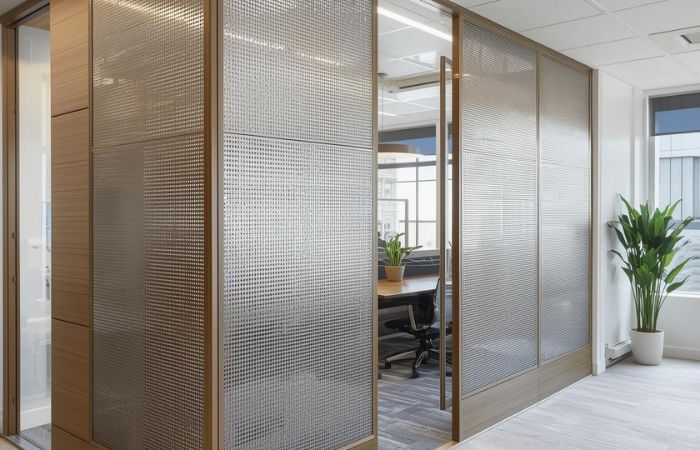
Wall panels are effective in spaces where ceiling treatment alone is insufficient. Boardrooms, lecture theatres and hospitality venues often benefit from additional wall absorption to manage reflected sound from vertical surfaces.
Suspended Baffles and Rafts
In high-ceiling environments such as atriums or industrial-style offices, vertical baffles or horizontal rafts increase the surface area available for sound absorption. These elements can become architectural features while enhancing acoustic control.
External Acoustic Screens
Perforated metal is also used in plant enclosures and façade screens to reduce mechanical noise transmission. This approach maintains ventilation while controlling sound breakout to surrounding areas.
Key Design Considerations
Perforation Pattern and Open Area Percentage
The size and spacing of perforations determine how much sound passes through to the backing material. Higher open area percentages generally allow greater sound absorption but must be balanced with structural integrity and visual design intent. Typical commercial acoustic panels range between 10 and 30 per cent open area.
Acoustic Backing Material
The effectiveness of a perforated metal system depends largely on the insulation behind it. Mineral wool of appropriate density and thickness is commonly used to achieve strong noise reduction coefficient ratings. The backing must be continuous to avoid gaps that allow sound reflection.
Material Selection and Finish
Aluminium is lightweight and corrosion-resistant, making it suitable for interior ceilings and coastal environments. Steel provides strength and durability in high-traffic or impact-prone areas. Powder coating allows colour matching to interior design schemes.
Coverage and Placement Strategy
Strategic placement is essential. Full ceiling coverage provides consistent absorption, while targeted wall panels address specific reflection points. For larger commercial projects, acoustic modelling can help determine the ideal coverage ratio and panel configuration.
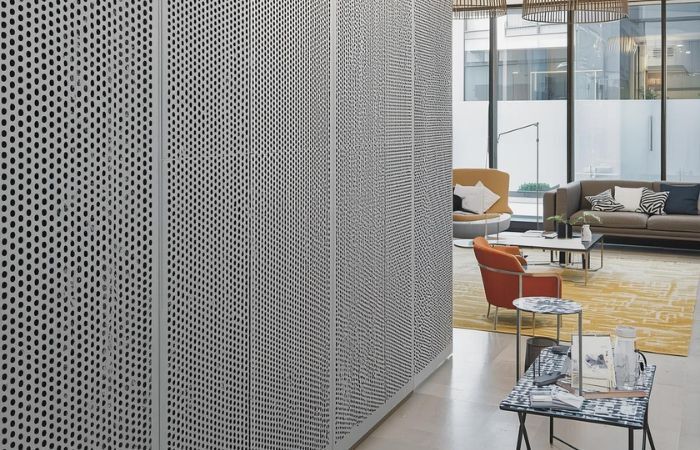
Benefits of Perforated Metal Panels in Commercial Spaces
Durability and Longevity
Unlike soft fabric panels, perforated metal resists moisture, staining and impact. This makes it well-suited to schools, retail centres and public transport facilities where durability is critical.
Fire Safety Performance
Metal panels are non-combustible, supporting compliance with fire safety requirements when paired with approved insulation materials.
Design Flexibility
Perforated panels can be customised with various hole patterns, shapes and finishes. They can also be folded, curved or integrated with lighting features to align with architectural concepts.
Low Maintenance
Perforated metal panels are easy to clean and maintain, providing long-term value over the life of a commercial property.
Practical Steps to Reduce Noise with Perforated Metal Panels
- Identify key noise sources and assess existing reverberation levels.
- Establish acoustic performance targets based on building use.
- Select appropriate perforation percentage and insulation thickness.
- Ensure professional installation with proper sealing and backing continuity.
- Combine ceiling and wall treatments where necessary for balanced results.
By approaching acoustic design strategically, commercial property owners can create environments that support productivity, comfort and compliance.
Enhancing Commercial Acoustics with the Right Supplier
Reducing noise in commercial spaces requires more than selecting a material. It involves choosing the correct perforation pattern, backing system and installation method to suit the building’s function and design intent.
Choosing the right acoustic solution is not only about efficiency; it is about building long-term resilience. At A1 Metal Mesh, we provide high-quality perforated metal panels tailored for Australian commercial applications. Contact us today to explore how we can help you achieve lasting acoustic performance.