
Modern Facades Reimagined: Wire Mesh Designs Architects Love
Posted by A1 Metal Mesh on 5th Mar 2026
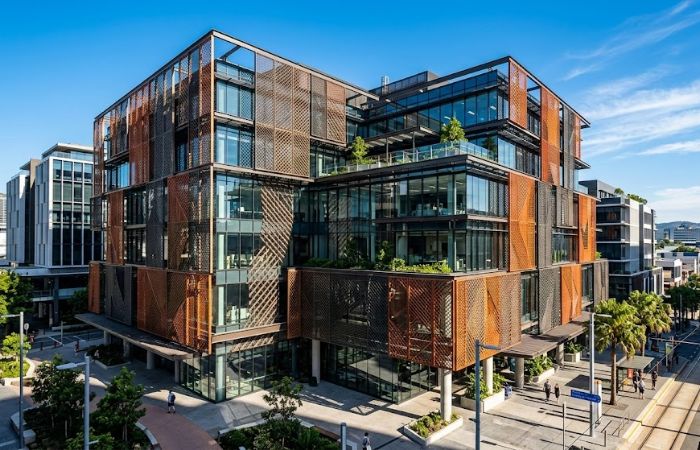
Modern building facades are no longer just protective shells. They define identity, influence environmental performance and directly impact long-term asset value. For architects, builders and developers across Australia, selecting the right facade material is a strategic decision that affects aesthetics, compliance and operational efficiency.
Architectural wire mesh has emerged as a leading solution in contemporary facade design, offering a balance of strength, transparency and visual sophistication. Before exploring the latest trends, it is important to understand exactly what architectural wire mesh is and why it plays such a vital role in modern construction.
What Is Architectural Wire Mesh?
Architectural wire mesh is a woven or welded metal fabric specifically manufactured for visible design applications in buildings. Unlike industrial mesh used for filtration or purely functional screening, architectural mesh is engineered to deliver both structural performance and aesthetic appeal.
Typically made from stainless steel, aluminium or other corrosion-resistant alloys, the mesh is produced in various weave patterns and aperture sizes. These variations control transparency, airflow, light penetration and shading performance. It can be supplied in flat panels, framed systems or tensioned installations, depending on project requirements.
Because of its strength-to-weight ratio and adaptability, architectural wire mesh is widely used in facades, balustrades, car park screening, interior partitions and sun-shading systems. Its versatility allows it to function as both a design feature and a performance-enhancing facade element.
Why Architectural Wire Mesh Is Gaining Momentum
The rise of sustainable and performance-driven architecture in Australia has increased demand for materials that do more than provide visual appeal. According to the Australian Bureau of Statistics, buildings account for approximately 24 per cent of Australia’s total energy consumption. This highlights the importance of facade systems that support passive environmental control.
Architectural wire mesh contributes to improved energy efficiency by acting as a breathable secondary skin. It reduces direct solar exposure while maintaining airflow, which can lower cooling demands in warmer climates.
Beyond performance benefits, mesh introduces texture and depth. It softens large elevations, complements glass and concrete and adds visual rhythm without overwhelming a design.
Key Modern Facade Trends Using Architectural Wire Mesh
Layered and Double-Skin Facades
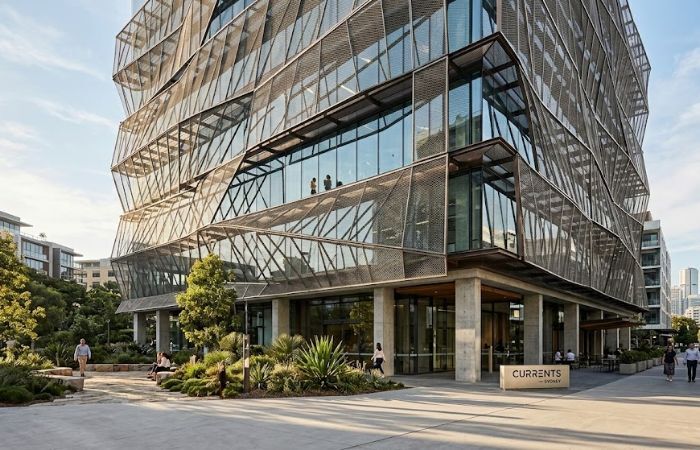
A major trend in contemporary architecture is the double-skin facade. In this approach, architectural wire mesh is installed as an external layer in front of glazing or solid walls.
This layered configuration delivers multiple benefits:
- Reduces glare and solar heat gain
- Enhances privacy without sacrificing light
- Creates dynamic shadow effects throughout the day
- Adds architectural depth to otherwise flat surfaces
Double-skin systems are particularly common in commercial offices, education facilities and mixed-use developments where sustainability targets are prioritised.
Sculptural and Curved Mesh Installations
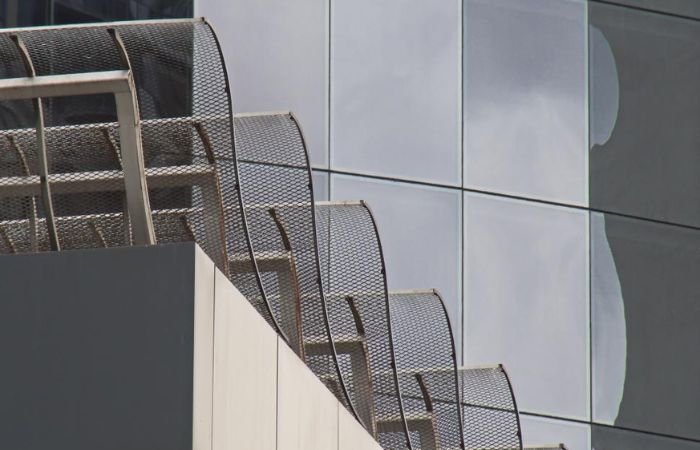
Architectural wire mesh is increasingly used in sculptural applications. Because woven mesh is flexible, it can be curved, tensioned or wrapped around structural frames to create flowing forms.
This trend reflects contemporary architecture’s preference for organic geometry. Curved mesh facades produce movement and texture, particularly when illuminated at night. The result is a building that shifts visually depending on lighting conditions.
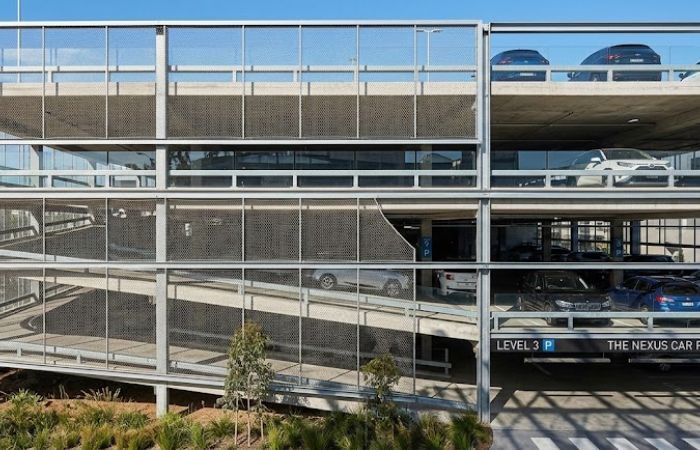
Transparent Screening for Car Parks
Urban car parks must meet ventilation requirements while maintaining security and aesthetic standards. Solid walls can create bulky, unattractive structures that restrict airflow.
Architectural wire mesh provides a refined alternative. It allows natural ventilation while delivering:
- Anti-climb security performance
- Visual permeability to reduce bulk
- Compliance with airflow requirements
- A modern, cohesive exterior finish
This approach transforms utilitarian car parks into integrated architectural features.
Integrated Branding and Lighting
Developers are increasingly using facades as branding tools. Architectural mesh panels can be powder-coated, customised or backlit to incorporate corporate colours and patterns.
When integrated with lighting systems, mesh facades create distinctive night-time identities while remaining subtle during the day. Retail centres and commercial developments frequently adopt this strategy to enhance street presence.
Sustainable Shading Solutions
Sustainability continues to influence facade design decisions. Architectural wire mesh can function as an external shading device that limits direct sun exposure while maintaining ventilation.
In Australia’s warmer regions, this is particularly valuable. Mesh shading systems help:
- Reduce internal heat gain
- Improve occupant comfort
- Lower reliance on mechanical cooling
- Support sustainable building certifications
Because the material is often manufactured from recyclable metals, it also aligns with circular economy principles.
Material and Finish Trends in Architectural Wire Mesh
Stainless Steel for Durability
Stainless steel remains a preferred material for exterior facades due to its corrosion resistance and structural strength. In coastal areas, selecting marine-grade stainless steel enhances durability in salt-laden environments.
Its clean, brushed finish pairs well with contemporary glass and concrete architecture.
Powder-Coated Finishes
Powder coating is increasingly specified for projects seeking colour integration. Neutral tones such as charcoal and bronze are popular in commercial developments, while custom colours can align with branding strategies.
Powder coating also adds a layer of surface protection.
Fine vs Open Weave Patterns
Modern facade design often balances transparency with shading. Fine weave patterns provide privacy and subtle texture, while larger apertures maximise airflow and openness.
Selecting the right weave depends on:
- Solar orientation
- Privacy expectations
- Wind load requirements
- Structural span
Careful specification ensures both visual and technical performance.
Practical Considerations for Project Teams
Early Integration Is Critical
Architectural wire mesh should be considered during early design phases. Structural supports, fixing systems and panel dimensions must be coordinated with the primary facade system.
Early collaboration between architects, engineers and builders reduces the risk of costly design changes later.
Compliance with Australian Standards
Mesh used in balustrades or safety screening must meet relevant Australian standards regarding opening sizes and load resistance. Developers and builders should verify compliance with the National Construction Code and local council regulations.
Long-Term Value and Maintenance
One of the strongest advantages of architectural wire mesh is its low maintenance profile. Stainless steel and coated aluminium resist corrosion and weathering, reducing lifecycle costs for asset owners.
For developers focused on long-term returns, this durability enhances overall project value.
The Future of Modern Facades
As sustainability benchmarks tighten and urban density increases, facade systems must balance aesthetics, ventilation, security and performance. Architectural wire mesh delivers this balance with flexibility and longevity.
For architects seeking expressive design, builders prioritising constructability, and developers focused on lifecycle performance, mesh offers a future-ready facade solution.
Choosing the right facade material is not only about appearance; it is about performance and resilience. At A1 Metal Mesh, we provide architectural wire mesh solutions tailored to Australian commercial, residential and infrastructure projects. Contact us today to explore how we can help you create a modern facade that delivers lasting impact.