
Bushfire Mesh & the 2026 Rule Changes: What Australian Homeowners and Builders Need to Know Before Summer
Posted by A1 Metal Mesh on 14th Aug 2026
Quick Summary
- Bushfire season is coming. Late winter to early spring is the window to screen your openings before the high-risk months arrive.
- The rules moved recently: NCC 2025 came into force on 1 May 2026 in Victoria, the ACT and WA. NSW and QLD deferred to 1 May 2027, and Tasmania has paused — so requirements now vary by state.
- A revised AS 3959:2025 has cleared two rounds of public consultation and is expected to publish. It may change how sites are assessed and which materials qualify.
- The mesh benchmark itself is steady: corrosion-resistant steel, bronze or aluminium, aperture 2 mm or less. Stainless steel 316 is the go-to for higher BAL ratings and coastal sites.
- Victoria-specific: Regulation 157 was revoked (1 May 2026) — a BAL-LOW site can now be built to BAL-LOW instead of defaulting up to BAL-12.5.
A1 Metal Mesh — Australian owned, shipping bushfire mesh Australia-wide from Melbourne · +61 433 193 942
Why Bushfire Mesh Matters — and Why Now
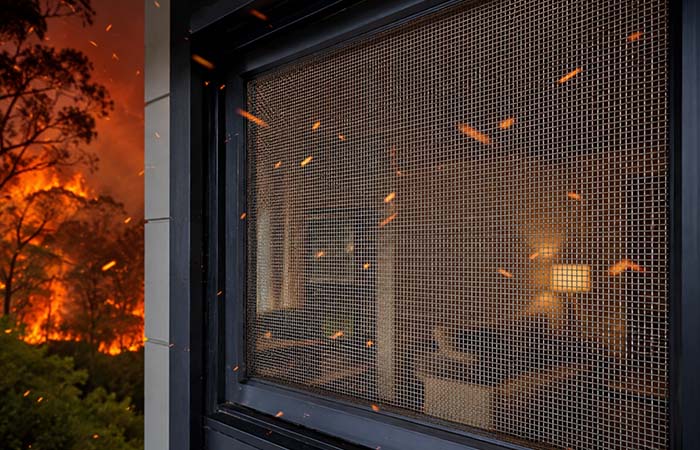
When people picture a house lost to bushfire, they imagine a wall of flame. In reality, research into Australian bushfires consistently shows that most homes are lost not to the fire front itself, but to ember attack — showers of burning debris that can travel kilometres ahead of a fire and find their way into any unprotected gap. A single ember through an open vent or window is often all it takes.
That is exactly what bushfire mesh is built to stop. By screening the openings in a building with fine, corrosion-resistant metal mesh, you deny embers the entry points they rely on and buy critical time as a fire front passes. It is one of the most cost-effective bushfire measures a homeowner can take.
And timing matters. Screening openings is a job best done before the season starts, not during it. Heading into spring and summer, now is the sensible window to assess your property and get compliant mesh installed while there is time to plan, source and fit it properly.
What Bushfire Mesh Actually Does
Bushfire mesh is a woven wire mesh engineered to withstand extreme heat and ember attack. Fitted to the vulnerable openings of a building, it works on three fronts:
- Ember protection — the fine aperture blocks burning debris from passing through openings and lodging in roof spaces, wall cavities or under decks.
- Radiant heat — a metal screen provides a measure of shielding against the intense radiant heat that precedes and accompanies a fire front.
- Flame contact — at appropriate specifications, mesh slows direct flame contact reaching combustible materials behind it.
Crucially, it does all of this without sealing the building up: air, light and ventilation still pass through, which is why the same mesh works for windows, doors, weep holes and vents alike. Paired with A1's Architectural Wire Mesh range, protection doesn't have to come at the cost of how a home looks.
Understanding BAL Ratings
Everything in bushfire construction flows from one number: your site's Bushfire Attack Level (BAL). A BAL assessment measures the level of bushfire risk a building faces based on vegetation, slope, distance to hazard and the region's Fire Danger Index, and it determines the construction requirements that apply. There are six levels:
- BAL-LOW — insufficient risk to warrant specific construction requirements.
- BAL-12.5 — ember attack risk; screening of openings begins to apply.
- BAL-19 — increasing ember and radiant-heat exposure.
- BAL-29 — heightened radiant heat plus ember attack.
- BAL-40 — high radiant heat with increased likelihood of flame contact.
- BAL-FZ (Flame Zone) — direct flame contact; the most stringent requirements.
The BAL rating system itself has not changed under the recent updates. What has shifted is some of the detailing and documentation around it — and, importantly, the material suitability at each level. Lower BAL ratings offer more flexibility in mesh material; higher ratings (BAL-40 and BAL-FZ) demand more robust, higher-melting-point materials and, in many cases, engineered or manufacturer-tested systems. Your BAL report is the starting point for every product decision below.
The 2026 Regulation Changes You Should Know About
This is the part that has caught a lot of homeowners and even some builders off guard, so it is worth setting out plainly.
NCC 2025 is now in force — but not everywhere
Bushfire construction is governed by AS 3959, which is called up through the National Construction Code (NCC). The NCC only carries legal force once a state or territory adopts it, and adoption is currently more fragmented than usual. NCC 2025 was published and came into force on 1 May 2026 in Victoria, the ACT and Western Australia. New South Wales and Queensland deferred adoption to 1 May 2027, and Tasmania has moved to pause NCC changes. In practice, that means the exact requirements for a bushfire job now depend on which state it is in and when it started.
Tighter ember-screening detail
NCC 2025 references the latest amendments to AS 3959 and reinforces detailing that had been causing failed inspections — particularly around vent and eaves screening, glazing at higher BAL levels, and ember protection at deck-to-wall junctions and underfloor enclosures. Some vent and roof-space screening that was previously treated loosely is now expected to be screened with tighter-aperture, corrosion-resistant mesh. If you are relying on an older spec, it is worth re-checking against current requirements.
A revised AS 3959:2025 is coming
At the standard level, AS 3959:2018 (incorporating its 2019 and 2020 amendments) remains the current published edition. However, a more significant revision — AS 3959:2025 — has completed two rounds of public consultation and is in the final stages of development. When published, it may affect how sites are assessed, how the BAL is determined, and which attachments and materials are acceptable. It would still need to be referenced by the NCC and adopted by each state before it applies, but it is firmly on the horizon.
Victoria: Regulation 157 revoked
For Victorian property owners specifically, Regulation 157 of the Building Regulations 2018 was revoked effective 1 May 2026. Building surveyors are no longer required to default a site assessed at BAL-LOW up to BAL-12.5 construction requirements — so a genuine BAL-LOW site can now be built to BAL-LOW. It is a small change with real cost implications for the right site.
The practical takeaway: treat the BAL number on a job as a live input, not a settled fact. If a project has not started construction, a fresh BAL assessment against current requirements is the safest move — and the mesh you choose should be matched to that assessment.
What Mesh Actually Complies? Materials & Aperture
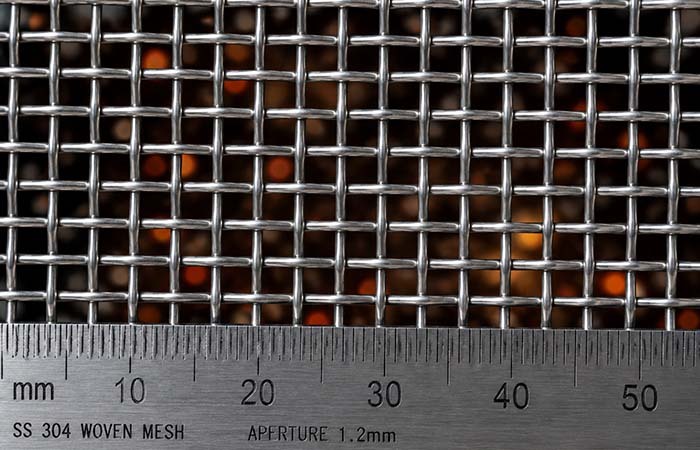
The good news is that the core specification for bushfire mesh is stable and straightforward. Under AS 3959, ember screening of openings must generally use non-combustible, corrosion-resistant mesh made from steel, bronze or aluminium, with an aperture of 2 mm or less. Any stainless steel woven wire mesh at 2 mm or finer meets that general benchmark.
Two caveats worth knowing. First, certain applications — notably some vents and eaves under the tightened NCC 2025 detailing — can require a finer aperture than the general 2 mm, so always confirm the specific requirement for each opening against your BAL report. Second, material choice matters more as the BAL rises: aluminium is suitable at lower levels but not for higher-BAL flame-contact scenarios, where stainless steel 316 is the reliable, corrosion-resistant choice — especially in coastal or salt-exposed areas.
Choosing the Right A1 Bushfire Mesh
A1 Metal Mesh carries a full range suited to bushfire screening. Here is how the main options line up:
| Mesh option | Material | Best for | Typical use |
|---|---|---|---|
| Stainless Steel 316 Bushfire Flyscreen | SS316 | Higher BAL / coastal & corrosive sites | Windows, doors, security screens |
| Stainless Steel Woven Wire (≤2mm) | SS304 / 316 | General ember screening | Vents, openings, custom fabrication |
| Bronze / Copper Woven Mesh | Bronze / Copper | Heritage & architectural + protection | Feature screens, decorative infill |
| Galvanised Woven Wire | Galvanised steel | Budget-conscious lower-BAL jobs | Security doors, general screening |
For most higher-risk and coastal properties, our Stainless Steel 316 Bushfire Flyscreen (available BAL-rated) is the workhorse choice for windows and doors. For general ember screening of openings and custom fabrication, our Stainless Steel Woven Wire Mesh at 2 mm or finer meets the AS 3959 benchmark. Where heritage or design is a factor, bronze and copper woven mesh combine protection with a premium finish, and galvanised woven wire offers a cost-conscious option for lower-BAL work. Browse the full BAL-rated bushfire mesh range to compare.
Where to Install Bushfire Mesh
Embers exploit the gaps most people forget. When you screen a property, don't stop at the obvious windows. The openings that most often need protection include:
- Windows and glazed doors
- Vents — wall, roof, eaves and subfloor vents
- Weep holes in brickwork
- Evaporative cooling units
- Skylights and roof penetrations
- Gutters and downpipes (with gutter guard mesh)
- Decking, patios and underfloor enclosures
- Eaves and gable ends
A methodical walk-around — ideally guided by your BAL report — is the best way to make sure nothing is missed. If you're unsure, send us your property details and we'll help you spec the right mesh for each opening.
Frequently Asked Questions
What is bushfire mesh and what does it protect against?
Bushfire mesh is a fine, corrosion-resistant woven wire mesh fitted to a building's openings to defend against ember attack, radiant heat and flame contact. It protects windows, doors, vents, weep holes, evaporative coolers, skylights, gutters, decking and eaves — the gaps embers use to get inside and ignite a home.
What standard does bushfire mesh need to meet?
Bushfire construction is governed by AS 3959, referenced through the National Construction Code. For ember screening, AS 3959 generally requires non-combustible, corrosion-resistant mesh of steel, bronze or aluminium with an aperture of 2 mm or less. Some vents and eaves can require a finer aperture under current NCC detailing, so confirm each opening against your BAL assessment.
Have the bushfire regulations changed for 2026?
Yes. NCC 2025 came into force on 1 May 2026 in Victoria, the ACT and WA, tightening ember-screening detail on vents, eaves and deck junctions; NSW and QLD deferred to 2027. A revised AS 3959:2025 has cleared two rounds of consultation and is expected to publish. In Victoria, Regulation 157 was also revoked, so a BAL-LOW site can now be built to BAL-LOW. The BAL rating system itself is unchanged.
Which mesh material is best for my BAL rating?
Lower BAL ratings (BAL-12.5, 19) allow more flexibility, including galvanised and aluminium options. As the rating rises to BAL-29, 40 and FZ, robust high-melting-point materials are needed — stainless steel 316 is the reliable choice, and is also best for coastal or salt-exposed sites. Your BAL report should drive the material decision.
Do I need bushfire mesh if I'm not building a new home?
New builds and major renovations in designated bushfire-prone areas must comply with AS 3959, but retrofitting bushfire mesh to an existing home is one of the most practical ways to reduce ember risk — especially heading into summer. Screening vulnerable openings is worthwhile protection regardless of whether it is strictly mandated for your build.
Do you supply bushfire mesh across Australia?
Yes. A1 Metal Mesh is Australian owned and operated and ships bushfire mesh Australia-wide from Melbourne. Send us your property details and BAL rating, and we'll recommend the right mesh for each opening.
Get ahead of the season. Screen your openings with compliant bushfire mesh before summer. Explore the BAL-rated bushfire mesh range, or contact us with your property details and BAL rating for a tailored recommendation.
Australian owned · shipping Australia-wide from Melbourne · +61 433 193 942